


A letter from Delfino
Cara Sonia,
È un tale piacere ricevere le tue lettere. Mi fai sempre sorridere.
Mi piace molto la primavera in fattoria perché tutto comincia a svegliarsi: le viti, e gli ulivi, i pascoli, e i prati, e anche le api e le galline sono più attive. Tutto sta dicendo «Buongiorno!»
Buongiorno dall’Italia, Sonia!
Il professore indiano sembra affascinante. È una cosa piuttosto straordinaria viaggiare così lontano per insegnare agli altri la filosofia e i modi orientali di capire il mondo. Non ho mai incontrato qualcuno così. Sto guardando il disegno che hai fatto di lui, e scommetto che nessuno era elegante quanto lui neanche alla nuova Settimana della moda di Milano. Ma fai benissimo a seguire i tuoi istinti. Se non sei una yogi, non sei una yogi. Il prosciutto deve essere rispettato.
In questo momento sto lavorando a un progetto di matematica importante. Sai che in Italia abbiamo un famoso matematico chiamato Delfino Codazzi? Ha trovato equazioni importanti sulla geometria delle superfici curve. Alcune di quelle stesse idee poi sono diventate utili nella teoria della gravità di Einstein. Vedi, mentre tu esplori la metafisica, io sono in qualche modo collegato al mondo della fisica. Immagina: fisica e metafisica. Tu e io possiamo insegnarci a vicenda qualcosa sui misteri della natura e del tempo e dello spazio e dell’essere stesso. And of course, we can practice English together.
Recently, my uncle Vincenzo visited us from Rome. He works there at Cinecitta, which is a large film studio. Here is made a photograph that he made of me. This summer, I am going to visit him, and he will show me the studio. I am very excited, because even though I am good at doing math, I love cinema! What do you most like to study? What style do you like to wear? Maybe you can make me a drawing?
Now, I must feed the chickens and complete the project.
Ciao,
Delfino
Dear Sonia,
It such a pleasure to get your letters. You always make me smile.
I like very much springtime on the farm because everything starts waking up: the vines, and the olive trees, the pastures, and the meadows, and even the bees and the chickens are more active. Everything is saying “good morning!”
Good morning from Italy, Sonia!
The Indian professor sounds fascinating. It is quite a thing to travel so far to teach others about philosophy and eastern ways of understanding the world. I have never met someone like that. I am looking at your drawing of him, and I bet no one was as stylish as him even at the new Milan fashion week. But you are absolutely correct to follow your instincts. If you are not a yogi, you are not a yogi. The prosciutto must be respected.
Right now I am working on a significant math project. Do you know that in Italy we have a famous mathematician called Delfino Codazzi? He found important equations about the geometry of curved surfaces. Some of those same ideas later became useful in Einstein’s theory of gravity. You see, while you are exploring metaphysics, I am somehow connected to the world of physics. Imagine that - physics and metaphysics. You and me, we can teach each other about the mysteries of nature and of time and space and being itself. And of course, we can practice English together.
Recently, my uncle Vincenzo visited us from Rome. He works there at Cinecitta, which is a large film studio. Here is made a photograph that he made of me. This summer, I am going to visit him, and he will show me the studio. I am very excited, because even though I am good at doing math, I love cinema! What do you most like to study? What style do you like to wear? Maybe you can make me a drawing?
Now, I must feed the chickens and complete the project.
Ciao,
Delfino
Asserting the Self: What is Ātmajit?
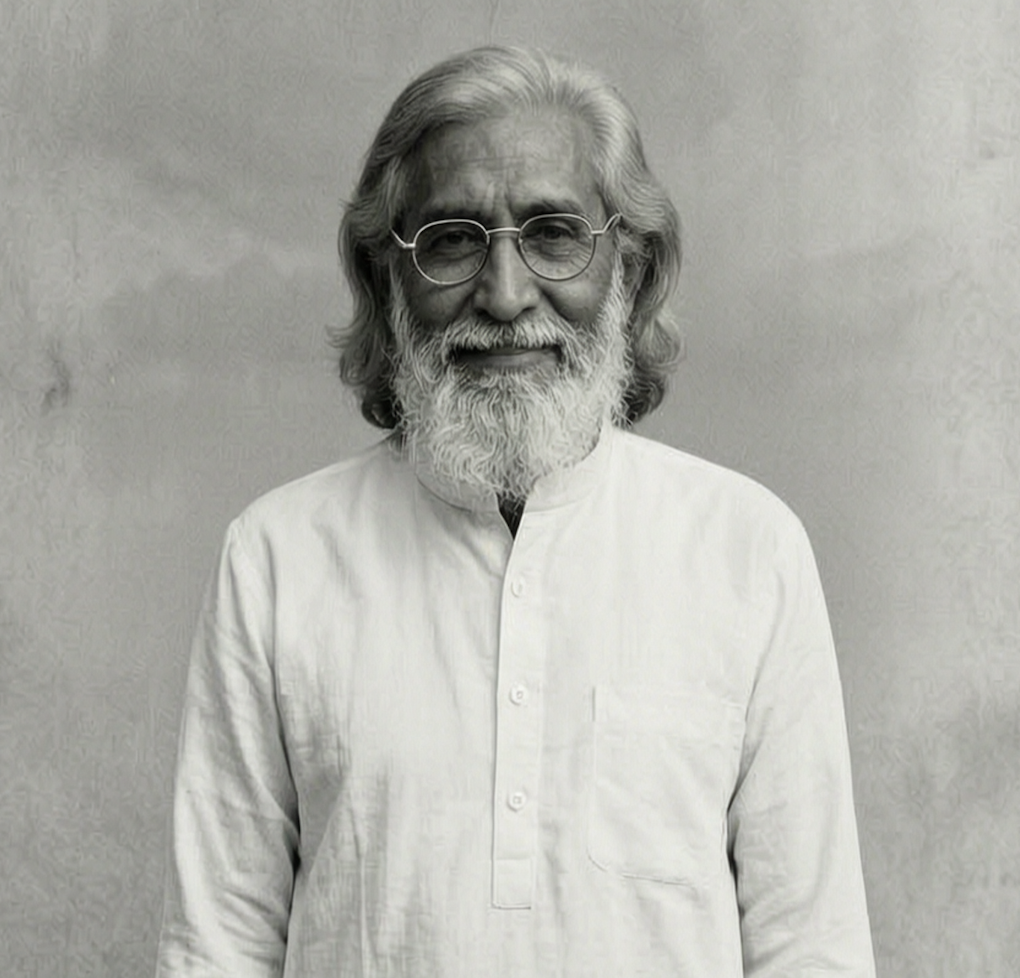
Satyendra N. Joshi lecture at University of California, Berkley in 1965
Esteemed colleagues, students, ladies and gentlemen: I am grateful to the Department of Philosophy and to the Center for South Asia Studies for inviting me to speak with you this evening. And thank you, Professor Merritt, for your generous introduction and welcome.
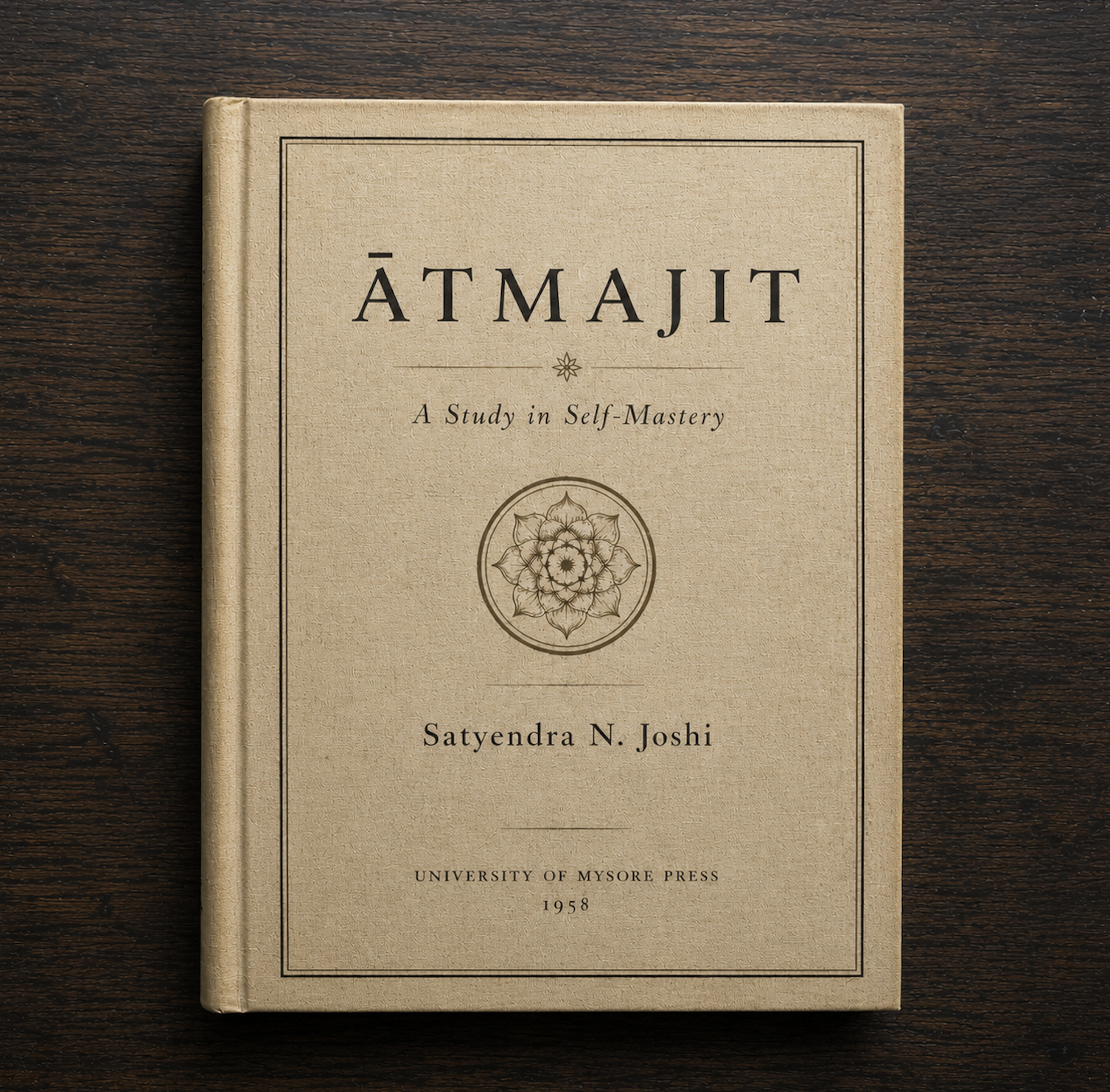
Today, let’s consider the concept Ātmajit, one who has conquered the self.
The Bhagavad Gītā states:
uddhared ātmanātmānaṃ nātmānam avasādayet
ātmaiva hy ātmano bandhur ātmaiva ripur ātmanaḥ
“Let a man raise himself by himself.
Let him not degrade himself.
The self alone is the friend of oneself;
the self alone is the enemy of oneself.”
How is it that there is a self that lifts and a self that is lifted, both friend and enemy? This short verse raises the question: what is the self? When I was a young man, it was this seemingly simple inquiry which led me to take up the study of philosophy. More recently, about seven years ago, I published a small book under the title Ātmajit, A Study of Self-Mastery. The first half of the book answers questions about the nature of the self, and the meaning of mastery, while the second half is a philosophical discipline of life through which mastery is gained. I should add that the title describes the subject of the book, not the condition of its author. The University of Mysore Press made no such claim on my behalf.
Let us ask, now, what is the self? The Sanskrit word ātman is usually translated into English as “self” and sometimes as “soul.” Neither word is exact. Depending on the context in which the term is used, ātman may refer to oneself in the ordinary sense, to the embodied individual person, or to that which the Vedānta takes to be the true Self: unborn, undying, not an object among objects, the very ground of awareness. For the purposes of this discussion, I shall refer to the ordinary self, with its thoughts, desires and emotions, as the lower self, written with a small s, and to the unchanging awareness as the higher Self, written with a capital S.
Now, ātmajit. What is this? The word joins ātman, the self, with jit, from the root ji, to conquer or overcome. An ātmajit is therefore one who has conquered the self. But here again we must ask which sense of the word “self” is intended. Conquest cannot perfect the higher Self, as its perfection is given. It is therefore the lower self that must be mastered, the mind and senses as they are governed by appetite, aversion, attachment and habit. Conquest, in this context, does not mean destruction. It means bringing the faculties into right relation. The disciplined mind becomes clear, action becomes deliberate. When the small s self is conquered, the higher Self may be known.
When I was nearly finished writing the manuscript, my wife Lila, who has a gift for seeing through a long philosophical argument to the mere human making it, asked me, “Why did you call it Ātmajit, rather than Jitātmā?” The established Vedāntic expression is jitātmā: one whose self has been mastered. Ātmajit, by contrast, means one who conquers the self. You see, I was raised in northern India, with Punjabi spoken around me. Its word for ātman is atam, and Atamjit had always sounded familiar to my ear. In Punjabi names, jit carries the sense of victory, and Atamjit may also be heard as the victory of the atam, the triumph of the soul or spirit. I liked the double meaning. One masters the lower self, and in doing so permits the higher Self to prevail. I told Lila, “Victory of the Soul sounds rather poetic, doesn’t it?” She considered this for a moment, and then she smiled, “I see. You are asserting yourself.” It is sometimes imagined in the West that self-mastery is the domain of yogi renunciants. I can only say that marriage provides no shortage of opportunities for its practice.